
Is Your Testosterone Declining?
July 03, 2025
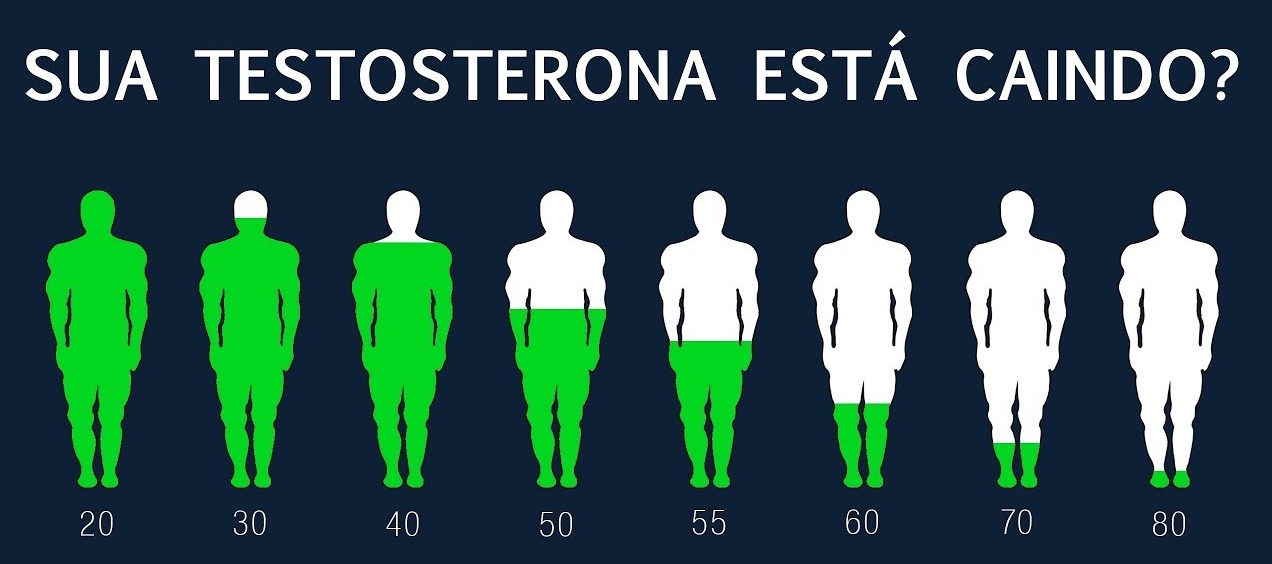
You're getting older, feeling less energetic, constantly tired, your libido and sexual performance are declining… So you decide to get your Testosterone levels checked.
You're getting older, feeling less energetic, constantly tired, your libido and sexual performance are declining… So you decide to get your Testosterone levels checked, and you encounter the issue: the result is within the reference range, but at the lowest percentile, between 250, 300, and no more than 350, far from the upper limit of 800!
This raises the question: should you supplement this hormone or not? Is the laboratory value more important than your symptoms?
Understand whether or not to supplement your Testosterone levels, where clinical symptoms are always more relevant than any lab test.
In a study conducted and published by The New England Journal of Medicine, involving 790 men with testosterone deficiency who received either testosterone gel or a placebo, the men who received supplementation showed an improvement in their FACIT – Functional Assessment of Chronic Illness Therapy scores, indicating improved fatigue; and also in the vitality scale of the 36-Item Short-Form Health Survey (SF-36), indicating better vitality and disposition.
The study showed that testosterone supplementation improved patients' vitality.
In the same study published by NEJM, men who received testosterone supplementation showed better scores on the PDQ-Q4, increased sexual desire according to the DISF-M-II, and improved erection according to the IIEF, all validated questionnaires for assessing sexual performance and desire.
Supplementation led to a statistically significant change in patients' outcomes regarding improved sexual activity.
A meta-analysis (the highest level of evidence, combining several studies), evaluating 1083 individuals, of whom 625 were randomized to receive Testosterone, showed that the treatment resulted in a 6.2% reduction in initial fat mass and an increase of 1.6kg (+2.7%) in lean mass.
This is no surprise – we know that Testosterone induces hypertrophy in skeletal muscle through different mechanisms, both via the androgen receptor and independent pathways.
In studies (https://pubmed.ncbi.nlm.nih.gov/26504040/ and https://pubmed.ncbi.nlm.nih.gov/22584031/) that evaluated testosterone levels in patients diagnosed with prostate cancer, it was observed that patients with lower testosterone levels are more likely to present with more severe prostate cancer at the time of diagnosis and with a worse prognosis!
Conversely, testosterone supplementation did not increase the frequency of prostate cancer, and has even been studied in patients with active cancer.
In the first decade of this century, some retrospective studies and randomized trials suggested that testosterone supplementation increased the risk of cardiovascular diseases, which led the FDA (the "US Anvisa") to issue a statement on the potential cardiovascular risks of Testosterone. However, NONE of the previously published studies were adequately designed to evaluate cardiovascular events!
This content is part of Clínica Revitalize's commitment to translating science into accessible clinical practice — without losing rigor or depth.